LIGHTWEIGHT AUTOMOTIVE BODY STRUCTURES
Exploring Vehicle Lightweight Scalable Manufacturing And Structural Advancements To Enhance BIW Architecture Safety Performance And Integrity In Modern Vehicles Using Digital Engineering And CAE For Automotive Body Structures
March 4th and 5th 2026 - VIRTUAL CONGRESS - Time Zone(EDT)
The Lightweight Automotive Body Structures 2026 Virtual Congress, on March 4–5, 2026, offers a uniquely comprehensive platform to explore the future of vehicle lightweighting, scalable manufacturing, and digital engineering integration. My motivation to attend this conference stems from its strong alignment with current trends in sustainable mobility, vehicle efficiency, and computational design—areas that are rapidly redefining automotive engineering worldwide.
As the industry transitions toward electrification and stricter environmental regulations, reducing vehicle mass without compromising safety or performance has become a central engineering challenge. This congress directly addresses that challenge by bringing together experts in Body-in-White (BIW) design, structural optimization, and CAE-driven digital development to share the latest advancements in materials, design workflows, and simulation techniques. Participating in sessions that emphasize multi-material integration, dissimilar material joining, and topology optimization will provide invaluable insights into the complex trade-offs between cost, manufacturability, and performance.
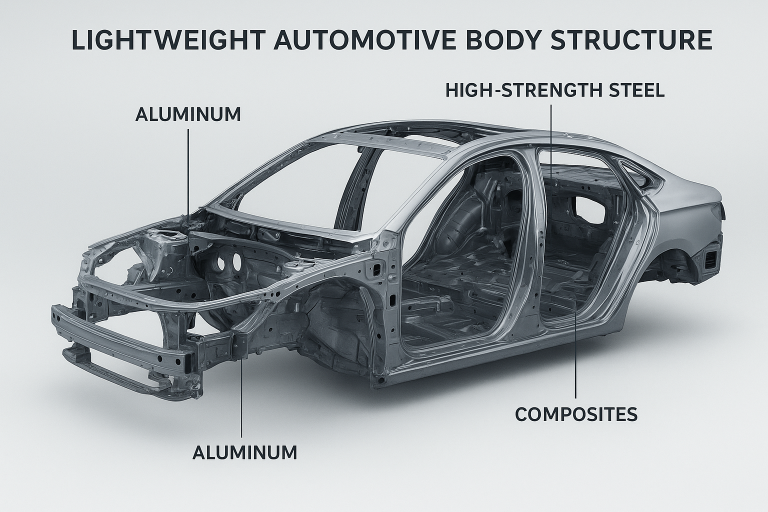
Day One’s sessions on integral development processes for lightweight modular structures and innovative materials such as advanced composites and high-strength alloys will deepen my understanding of how integrated design and simulation workflows can improve structural reliability and sustainability. The exploration of battery integration with BIW and intelligent joining technologies is particularly relevant in the era of electric vehicles (EVs), where the interplay between weight, strength, and safety defines product competitiveness. Learning from industry leaders about cost-effective lightweighting solutions and circular economy practices will strengthen my ability to contribute to projects focused on sustainable engineering and product lifecycle efficiency.
Day Two’s focus on digital engineering and CAE applications resonates strongly with my professional interests. Sessions on digital twins, multiphysics simulation, and data-driven optimization offer an in-depth look into how predictive modeling can reduce development time while improving crashworthiness, durability, and energy absorption. Exposure to machine learning applications in predictive durability, finite element analysis (FEA) for crash energy management, and topology optimization techniques will enhance my technical proficiency in simulation-based vehicle design. These approaches are critical to enabling lighter, safer, and more energy-efficient vehicles—key objectives in the next generation of mobility solutions.
Moreover, the panel discussions on integrating CAE with manufacturing and validation workflows will help me understand how digital feedback loops and real-world data improve correlation between simulated and actual performance. Such knowledge is essential for bridging the gap between virtual prototyping and production-scale implementation.
Overall, attending this conference will provide a holistic perspective on how lightweight design, material science, and computational engineering converge to drive innovation in modern vehicle architectures. The insights gained will directly contribute to my professional growth, enabling me to apply advanced engineering principles and digital tools toward developing safer, more sustainable, and high-performing automotive structures.
200+
Participants
43
Expert Speakers
43
Presentations
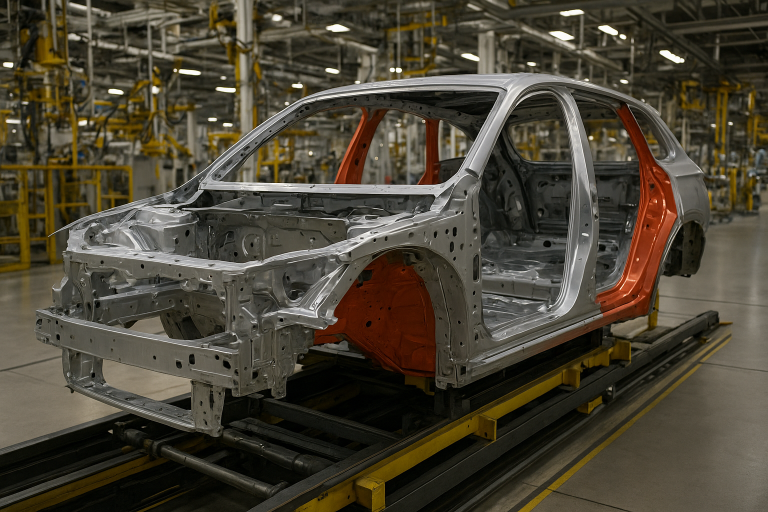
Expert Panel Discussions
Engage with industry leaders in dynamic conversations focusing on innovative solutions for integrated development of lightweight modular automotive structures, advanced materials, and cost-effective joining strategies. Experts will also discuss digital engineering transformation, machine learning for durability, and integrating multiphysics CAE techniques to enhance vehicle safety, performance, and sustainability.

Cutting-edge Research
Explore cutting-edge research driving the future of automotive body structures, focusing on advanced lightweight modular designs, multi-material integration, and digital twin–enabled engineering. Sessions will delve into topology optimization, intelligent crash safety modeling, AI-powered predictive durability, multiphysics CAE, and breakthrough joining technologies advancing sustainable, high-performance, and cost-efficient next-generation vehicle structures and manufacturing processes.